


|
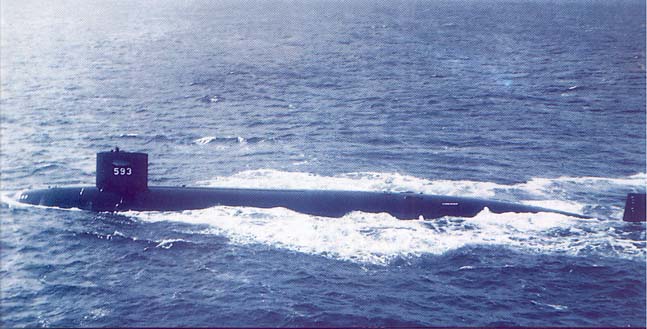
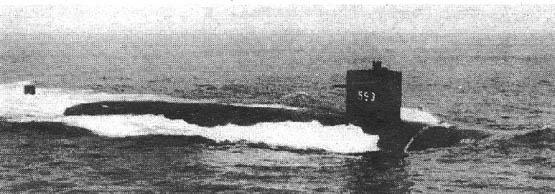
Submarino norteamericano de ataque de la segunda generación perteneciente a propulsión nuclear, el Thresher, botado el 9 de julio de 1960, había pasado el primer año de servicio realizando pruebas de mar antes de regresar al arsenal de Portsmouth a fin de someterse a una importante reparación. El 9 de abril de 1963 zarpó para efectuar las pruebas finales, junto con el buque de rescate Skylark. Llevaba 129 personas a bordo (4 oficiales, 108 marineros y 17 civiles cuya misión era verificar las prestaciones).
A las 07.47 del 10 de abril, el Thresher comunicó al Skylark que estaba preparado para sumergirse a la profundidad de pruebas (la máxima cota a la que puede trabajar un submarino con seguridad y que, aun siendo inferior a la máxima, no suele superar- se). Actualmente se sabe que era del orden de 400 metros. En realidad, cuando las dos unidades establecieron comunicación, por temor a ser escuchados, nunca indicaron la profundidad de prueba y se refirieron a fracciones o medidas de la misma. De todos modos, dado que los submarinos de la clase Thresher han sido dados de baja o sustituidos por los de la clase Los Ángeles, se ha podido saber el dato numérico, entonces secreto. A las 07.52, el Thresher comunicó que estaba a 122 m y que se procedía a controlar las eventuales filtraciones de agua a bordo. A las 08.09 anunció que se hallaba a mitad de la cota máxima y 26 minutos más tarde, que faltaban 91,5 m para alcanzar la profundidad de prueba. No comunicó nada más hasta las 08.52 cuando precisó que "iba hacia la profundidad de aprobacion" A las 09. 12 siguió un control normal de las comunicaciones y todo parecía correcto, pero un minuto más tarde el oficial que estaba al teléfono submarino en el Skylark captó señales parciales que interpretó como: 'Tengo el timón a subir.... estoy intentando dar aire". El mensaje no es del todo insólito: "timón a subir" se refiere a la inclinación del buque (con la proa hacia arriba), mientras que "dar aire" es una expresión empleada a bordo de los submarinos, que hace referencia a la expulsión del agua de los depósitos de lastre, para que el submarino pueda emerger y recobrar la posición horizontal.
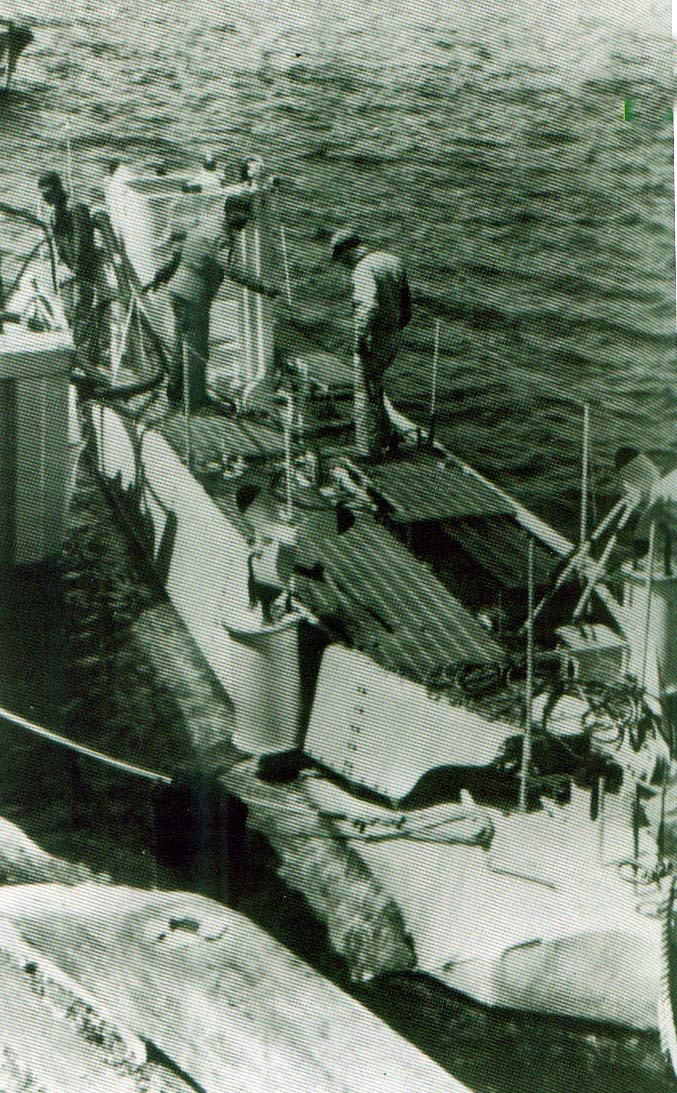
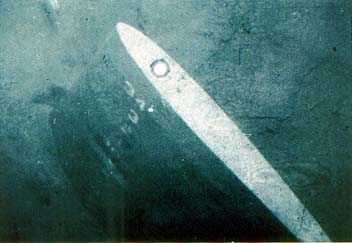
Batiscafo Trieste Parte superior del timon vertical. El Skylark intentó comunicar con el Thresher, pero no lo consiguió. A las 09.17 captó una transmisión confusa y el oficial encargado dijo haber oído la palabra "inmersión de prueba", luego el silbido del aire, el desgarro del metal y nada más. La tripulación del submarino debió de morir en pocos minutos, aplastada por la enorme presión, mientras el buque descendía lenta e inexorablemente al fondo. El hundimiento del 7hresher fue confirmado por el batiscafo Trieste 11, que se sumergió en el lugar al cabo de cuatro meses de la desaparición del buque y sacó algunas fotos de los restos, pero no se encontró a nadie que explicara la causa del desastre. El informe de la comision de investigación decía: "Se cree que una inundación accidental de la sala de máquinas fue la causa más probable del hundimiento del submarino nuclear Thresher, perdido el 10 de abril de 1963, 220 millas al este del cabo Cod, con 129 hombres a bordo. La Marina considera muy verosínúl que existiese un defecto en una conducción de agua de mar del Thresher, posiblemente en la sala de máquinas. La enorme presión que existe a aquellas profundidades -unos 40 kg/crn2- ocasionó una violenta entrada de agua y la consiguiente inundación, que puso fuera de servicio los circuitos eléctricos, provocando la pérdida de energía. El Thresher detuvo su marcha y empezó a hundirse. En pocos minutos llegó a su profundidad de colapso y se inundó, posándose sobre el fondo marino a unos 2.500 metros bajo la superficies'.
|
|
Four decades ago,
the world still struggled with a very different conflict, a
Cold War between the United States and the Soviet Union. And
it was forty years ago this spring that the Seacoast had to
cope with the loss of the U.S.S. Thresher.
The Thresher was the first of a new class of nuclear submarines. Launched at the Portsmouth Naval Shipyard on July 9, 1960, the Thresher represented the culmination of years of intense design work. Her hull design captured some of the best aspects of hydrodynamic design pioneered by the USS Albacore, which is now a museum in Portsmouth. The Albacore also contributed to her sonar array design and stealthy seakeeping ability which made the Thresher a formidable foe. Designed to hunt her submerged Soviet counterparts in the event of war, this fast attack submarine could muster 28 knots and remain submerged at depths of up to 1,300 feet of water for an indefinite amount of time thanks to her mighty nuclear reactor. For three years, the Thresher operated off the Eastern seaboard as any lead ship for a new class of submarines might do, conducting tests and taking part in exercises to work out the kinks in the ship's design, and to see how she could be improved upon. In early 1963 she returned to the Portsmouth Naval Shipyard for a routine period of inspecting and fine-tuning the powerful submarine's systems. On April 9, 1963, the Thresher went to sea with a submarine rescue vessel, the USS Skylark to conduct some deep diving exercises which the Skylark would monitor from the surface. On board with her usual compliment of 112 officers and crew were an assortment of 17 shipyard workers and engineers on board for the brief cruise to observe how well she performed. Makeshift accommodations were prepared for these guests, since room is tight on a 278 foot long submarine. A lucky few were turned away as there was no more room within the already confined quarters of the vessel. On April 10, 1963, some 220 miles east of Cape Cod, the Thresher took her deep diving tests to come close to her design limit of 1,300 feet under water. Above, the Skylark sat and monitored the dive. Deeper and deeper she went, as it slowly became apparent something was going wrong. Fifteen minutes into the dive, as the Skylark monitored garbled messages from the struggling submarine, there was a sound "like air rushing into an air tank" and then nothing. The Thresher had vanished in 8,500 feet of water, taking with her 129 men to their watery graves. A fleet of ships converged on the location to search for the Thresher. Among them were the USS Recovery and the bathyscaph Trieste which found the submarine as shattered as the lives of 149 children and the wives of those lost at in the accident. Her loss was equally shocking to the submarine community, which had considered the briny deep mastered following the many voyages by United States nuclear submarines to every corner on the globe, including exploration of what lay under the North Pole's icecaps. An investigation was called for. Indeed, the Thresher was the first nuclear submarine lost at sea- something which was simply not supposed to happen. The disaster had not been any single failure, it was concluded, but rather a series of small failures that culminated in the ship's loss. For while each of the ship's operating systems had been tested successfully independently of one another, they had neither been tested together as a unit, nor at the depths that Thresher was operating at. Investigators worked out the most plausible explanation for the disaster they could, since the wreck is rather inaccessible at such extreme depths. A leak developed in a seawater connection; as a result, valves were closed, forcing the automatic shutdown of the ship's nuclear reactor. Without the power of her reactor to propel Thresher to the surface, her captain probably tried to blow water out of her ballast tanks to make her lighter, and angled her bow planes upward. At those depths though, such a technique was doomed to fail, as the high pressured air cooled and froze any moisture in the pipes, effectively blocking them, and causing the submarine to sink deeper until the water pressure shattered the hull, breaking it into six fragmented pieces scattered across the ocean floor. It was clear that not only had the Thresher heralded in a new era of submarines, but a host of new challenges and dangers to be faced by submariners and the designers of their ships. While families grieved, lessons were learned and applied. SUB SAFE, a program conceived to address these problems ensured that every part of any new submarine had to comply with strict rules which reconsidered how submarines were built and operated. Every part had to have a pedigree. The process set back submarine construction for several years, but it worked. The other thirteen submarines of the Thresher class, renamed the Permit class, operated without any loss until they were retired from service in 1996, replaced by the Los Angeles Class. In fact, as a result of SUBSAFE, the only other nuclear submarine lost by the United States Navy was the USS Scorpion, a vessel built prior to the Thresher which was mysteriously lost off the Azores in 1968, apparently a victim of a torpedo malfunction. Of concern for both these wrecked ships are their reactors, filled with their deadly cargo of radioactive elements. Surveys of the Thresher in 1977, 1983 and 1986 found no real spread of radioactivity in the area or into the ocean's food chain. Indeed, the only significant thing found was during the 1986 survey, when the team completed their top-secret survey of the Thresher and used what little time they had left to find a much more famous wreck- the remains of the Titanic. You may not be able to visit or see the Thresher, but you can visit her memorial at the USS Albacore museum in Portsmouth, and take a tour of the Albacore which paved the way for submarines of the future. |