


Foods Carried Aboard a Type IXC U-Boat for a 12-week Voyage
Please note that this is only a reference page, not hard science. This should however give you a pretty good indication on what was eat and how it was handled on the U-boats. The traditional truth is that the German U-boat men ate the best food of all the German forces in the war.
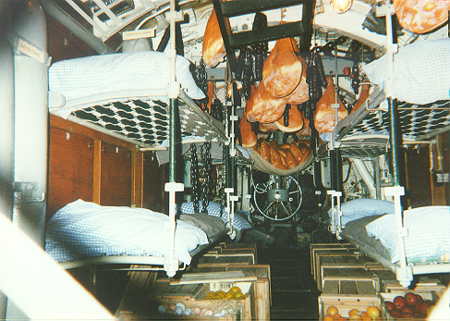
Example of how the food was stored, here on the U-505 a IXC type boat
494 lbs. fresh and cooked meats
238lbs. sausages
4,808lbs. preserved/tinned meats
334lbs. preserved fish
3,858lbs. potatoes
397lbs. dried potatoes
3,428lbs. other vegetables
1,226lbs. bread dough
2,058lbs. preserved breads
463lbs. rice and noodles
595lbs. fresh eggs
917lbs. fresh lemons
2,365lbs. other fruits
551lbs. butter and margarine
611lbs. soup ingredients
408lbs. marmalade and honey
309lbs. fresh and preserved cheese
1,728lbs. milk
441lbs. fruits juices
154lbs. coffee
205lbs. other drinks
441lbs. sugar
132lbs. salt
108lbs. chocolates
Menus were followed strictly to promote proper diet and good nutrition. Breakfast would usually consist of coffee, buttermilk soup, biscuits, hardbread with butter or honey and eggs. Lunch would be soup, potatoes, cooked meat and vegetables, and fruit. Dinner included sausages or canned fish, cheese, bread, and coffee, tea or chocolate.
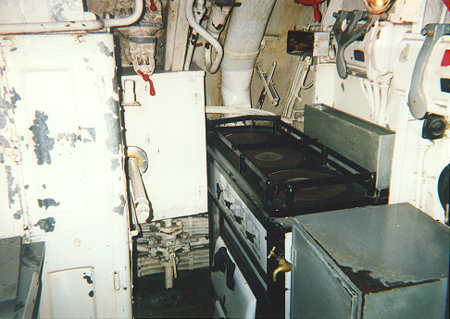
The galley was located on the starboard side, between the chiefs' quarters and the wardroom, and was made up of three hotplates and two small electric ovens. It also contained a refrigerator, self-heating soup kettle, provision lockers, and an enamel sink with hot and cold fresh water and hot salt water.
Food storage was the responsibility of Obersteuermann (Navigator) who doubled as the Quartermaster. Non-perishables were stored in the small larder, located across from the galley, as well as the after head, which was located in the same compartment.
Hams, sausages and other preserved meats were stowed between the forward torpedo tubes and also overhead in the control room. These out of the way spaces allowed long term storage of these items which were consumed rather slowly. Bread was stored in the forward torpedo room and electric motor room. While it was in the way, bread was consumed pretty quickly. Fresh meat and produce was stored in the small refrigerator and pantry. These were the coolest places on board, but the products only lasted a short number of days.
Once out of fresh food the crew settled down to sausage and canned food, straining the cooks ability to satisfy the crew. Needless to say, a good cook was worth his weight in gold. Later in the war the addition of Bratlingspulver (soya-based filler) made the food even more bland.
Three rules governed the storage of food.
- It had to be secured so as not to come loose during an enemy
attack.
- It had to be evenly distributed as to disturb the trim of the
boat as little as possible as it was consumed.
- It had to leave free access to all hatches and valves. Consumption was weighed daily and the trim would be adjusted to compensate this usage.
U-boat crews would often trade with fishermen for fresh fish as well as board their victims and remove any foodstuffs they could carry.
(I've lost the name of the person who compiled this information. If the person wishes to receive a credit she should just drop me a line.)